



Sassicaia 1985 | The Vintage That Put Bolgheri on the World Stage
Sassicaia 1985 would later receive 100 points from Robert Parker, who went so far as to call it one of the greatest wines produced anywhere in the world in 1985.
He also ranked the 1985 among the finest wines made in the 20th century.
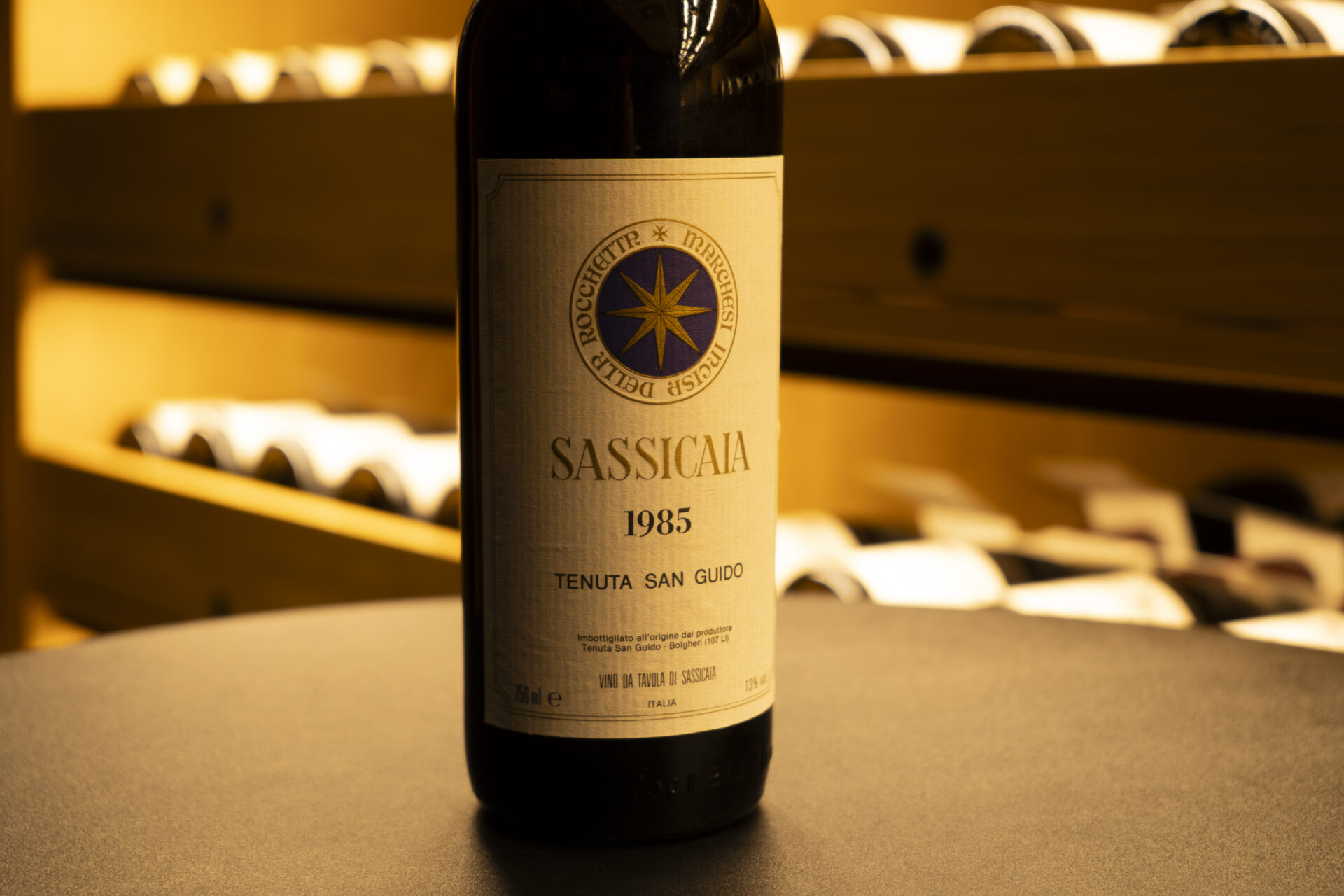
Yet look closely at the label on this bottle and you will not find the designation seen on Sassicaia today: “Bolgheri Sassicaia DOC.”
Instead, it reads:
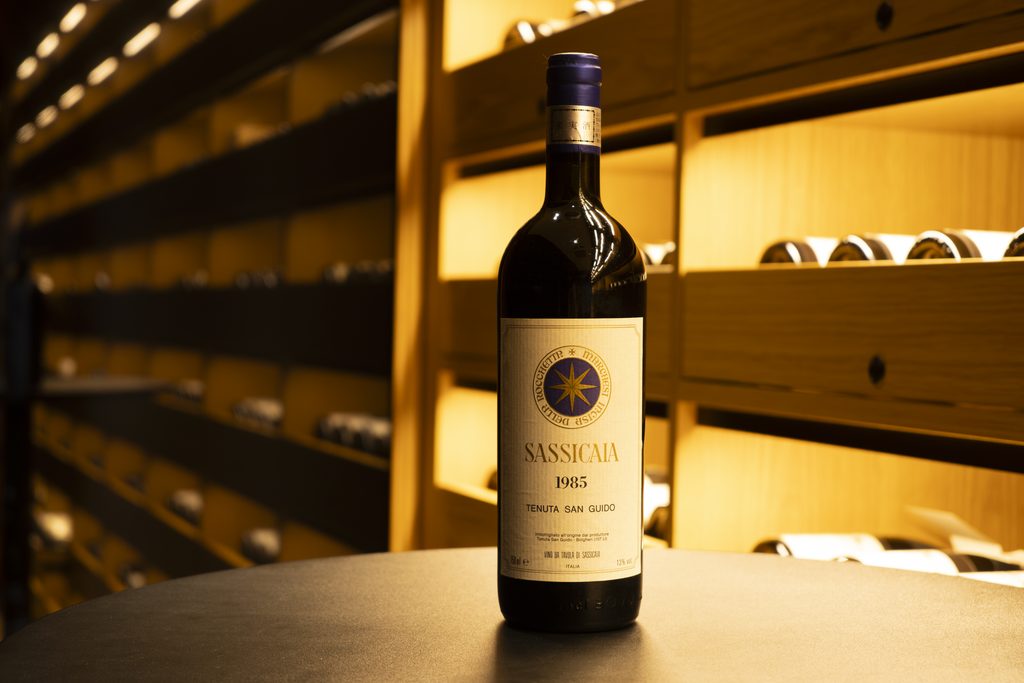
“VINO DA TAVOLA DI SASSICAIA”
At the time, it was officially classified as table wine.
A bottle that would later be recognised among the world’s great wines did not fit within Italy’s existing appellation system.
That striking contradiction is one of the most fascinating aspects of Sassicaia 1985.
Why was 1985 so special?
Tenuta San Guido itself describes 1985 as a “historic year for Tuscan wine.”
Spring frost reduced the size of the crop.
With fewer bunches on the vines, however, the remaining grapes were able to ripen more evenly, followed by well-timed rainfall and a hot, sunny summer.
Particularly noteworthy is the estate’s record that both technical ripeness — including sugar and acidity — and the phenolic maturity of the skins and seeds reached an ideal stage at the same time.
According to Decanter, yields were just 35 hectolitres per hectare, with production limited to approximately 62,500 bottles.
85% Cabernet Sauvignon
According to Decanter, the 1985 blend consisted of:
85% Cabernet Sauvignon and 15% Cabernet Franc.
A remarkably simple composition that remains closely associated with Sassicaia.
At harvest, grape temperatures reached 25–28°C. Tenuta San Guido therefore harvested only during the cooler hours of the day and used running water to cool the fermentation tanks.
Even in such a favourable vintage, the estate did not simply leave the fruit to nature.
How those fully ripened grapes were handled was carefully controlled throughout the winemaking process.
The wine was then matured in oak for 22 months.
Estate records indicate that approximately 40% of the barrels were Slavonian oak, while around 60% were predominantly French oak from Tronçais, with a smaller proportion from Allier. Around 65% of the barrels were new.
It offers a glimpse into the winemaking of Sassicaia in the 1980s, which differs in some respects from the approach used today.
Why Cabernet in Tuscany in the first place?
The story of Sassicaia began more than 40 years before the 1985 vintage.
In the 1940s, Marchese Mario Incisa della Rocchetta began producing Cabernet-based wine in Bolgheri.
For Tuscany at the time, it was an unconventional choice.
The vineyards of Tenuta San Guido include soils rich in stones and gravel.
The name “Sassicaia” itself derives from this stony terrain.
Originally made for family and friends, Sassicaia eventually entered the market with the 1968 vintage, released commercially in 1971.
Many wines would later become known as “Super Tuscans,” but Sassicaia had already begun charting this path years earlier.
100 points — yet still “Vino da Tavola”
Robert Parker’s assessment is impossible to overlook when discussing Sassicaia 1985.
Parker awarded the wine 100 points on multiple occasions.
In a 2014 article, he placed Sassicaia 1985 among the defining wines of the 20th century and went further, describing it as the greatest wine produced anywhere in the world in 1985.
Decanter has likewise looked back on Parker’s 100-point score as one of the moments that helped make the vintage even more celebrated. In a later vertical tasting, Jane Anson also awarded it 100 points.
And yet in 1985, Sassicaia was still classified as “Vino da Tavola.”
Not because of a lack of quality.
Sassicaia had simply moved ahead of the wine regulations of its time.
When the appellation system caught up with the wine
Things began to change in 1994.
The rules of the Bolgheri DOC were revised to formally recognise red wine, while Bolgheri Sassicaia was established as a dedicated subzone for Sassicaia.
Then, in 2013, it became independent from Bolgheri DOC as today’s Bolgheri Sassicaia DOC.
The vineyards permitted to use this designation lie within the estate of Tenuta San Guido.
This means that a bottle of Sassicaia 1985 occupies a particularly interesting moment in the wine’s history:
between the era when Sassicaia was labelled Vino da Tavola and the later establishment of its own DOC.
The wine came first.
Recognition followed.
And eventually, the regulatory system caught up.
It is a progression almost unique to Sassicaia.
Why it is still discussed more than 40 years later
More than four decades have now passed since the 1985 harvest.
Yet well-preserved bottles continue to show remarkable longevity.
Mature examples have been described as retaining blackcurrant fruit alongside developed notes of cedar, truffle and tobacco, while maintaining balance and a long finish.
Serena Sutcliffe MW of Sotheby’s, tasting Sassicaia 1985 in 2016, noted blackcurrant character, a silky texture and beautifully harmonious maturity.
With a wine of this age, however, the reputation of the vintage and the condition of an individual bottle are two different things.
Storage temperature, fill level, cork condition and transport history can all affect how a bottle has evolved.
With Sassicaia 1985, the vintage itself matters — but so does how that particular bottle has spent the past 40 years.
That provenance becomes part of the experience of encountering the wine today.
The 1985 vintage that brought Bolgheri to the world
Sassicaia did not suddenly appear in 1985.
Its story had been developing since the 1940s, and the wine had been commercially released since the 1968 vintage, gradually building its international reputation.
Within that history, 1985 became the vintage that brought both Sassicaia and Bolgheri firmly onto the world stage.
Robert Parker: 100 points.
Approximately 62,500 bottles produced.
And on the label, the words:
“VINO DA TAVOLA.”
Knowing what Sassicaia would later become changes the way this label is seen today.
Sassicaia 1985
For in-store product availability, please enquire at IMAMI Ginza or IMAMI Shinsaibashi, or contact us.
Product selection and availability vary by store.
New arrivals are announced on our official Instagram @imami__japan and in our NEWS archive

