



The Art of Edo Kiriko | Traditional Patterns and Japanese Cut-Glass Craftsmanship
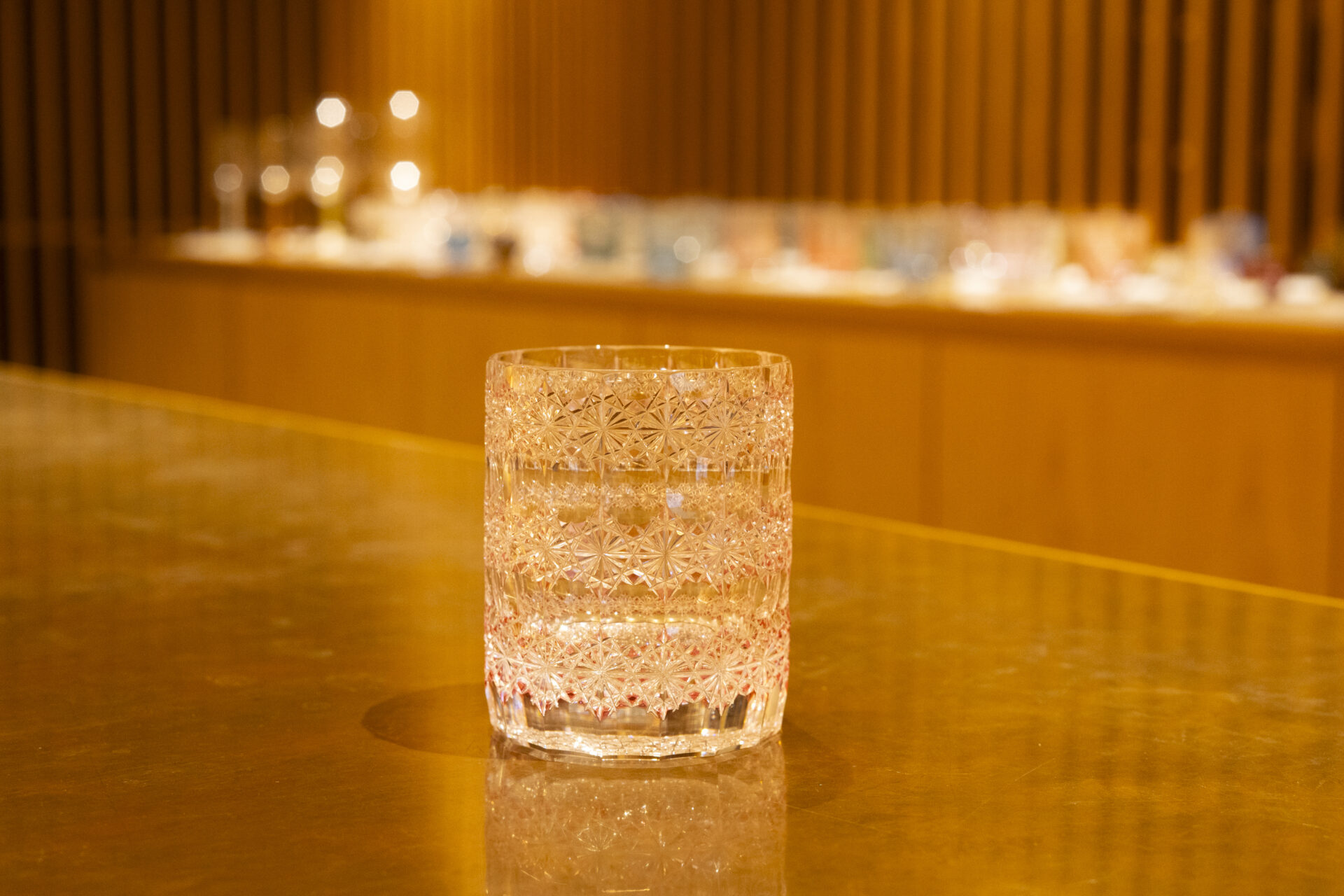
Light is shaped by every cut. The appeal of Edo Kiriko lies in how the artisan’s lines transform both glass and the drink it holds.
Edo Kiriko is Tokyo’s traditional art of cut glass. Geometric patterns such as Kiku-tsunagi and Kagome, delicate layers of coloured glass, and carefully polished facets give each piece its distinctive play of transparency and reflected light.
At IMAMI, we see Edo Kiriko not only as a traditional Japanese craft but also as drinkware for whisky and sake, and as the work of individual artists. Through pieces from the makers we carry, this story explores how the craft’s patterns and techniques continue to evolve.
The Origins of Edo Kiriko: A Glass Craft Dating to 1834
The origins of Edo Kiriko are traditionally traced to 1834, when glass merchant Kagaya Kyubei is said to have engraved glass with an abrasive called emery in Edo, now Tokyo. By cutting the surface rather than simply decorating it, artisans created facets that captured and reflected light.
Western glass-cutting techniques were introduced during the Meiji period, contributing to advances in cutting and polishing. Edo Kiriko was designated a traditional craft of Tokyo in 1985 and a nationally designated traditional craft in 2002. It remains a living practice shaped by both continuity and innovation.
Kiku-tsunagi, Kagome and Nanako: Patterns Made of Light
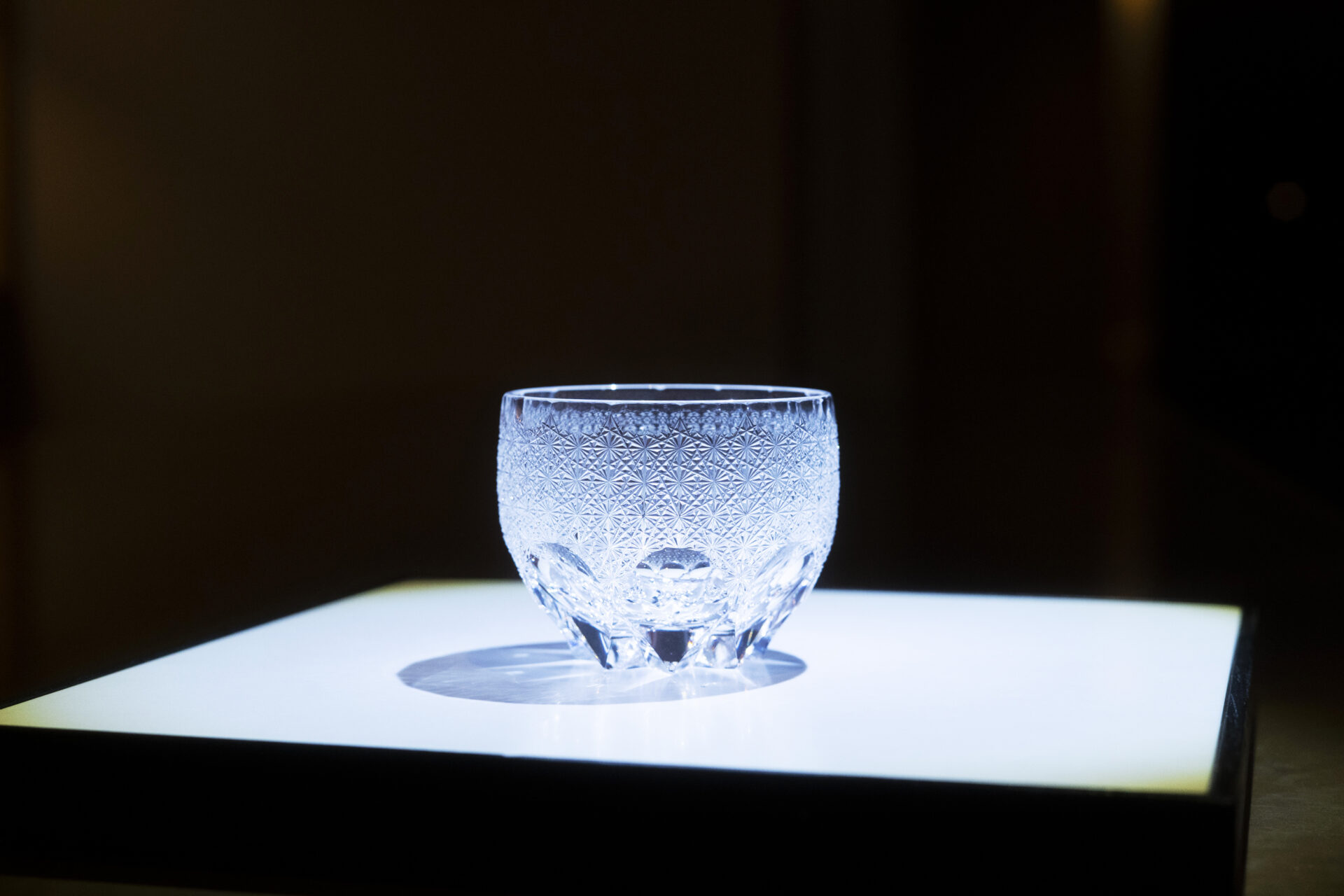
Edo Kiriko patterns emerge from the precise crossing of many lines. Their angles, depth and density create small facets that catch the light differently as the glass turns. The impact of a motif is therefore inseparable from the craft of cutting it.
Kiku-tsunagi forms a repeated chrysanthemum-like pattern through finely connected cuts. Kagome recalls the interwoven geometry of a bamboo basket. Nanako, named for the appearance of tiny fish eggs, creates a delicate field of closely spaced reflections.
The Kiku Kagome sake cup by Shinozaki Glass brings the latticework of Kagome together into an impression reminiscent of a chrysanthemum. Looking closely at the intersections reveals how the apparent brilliance is constructed line by line.
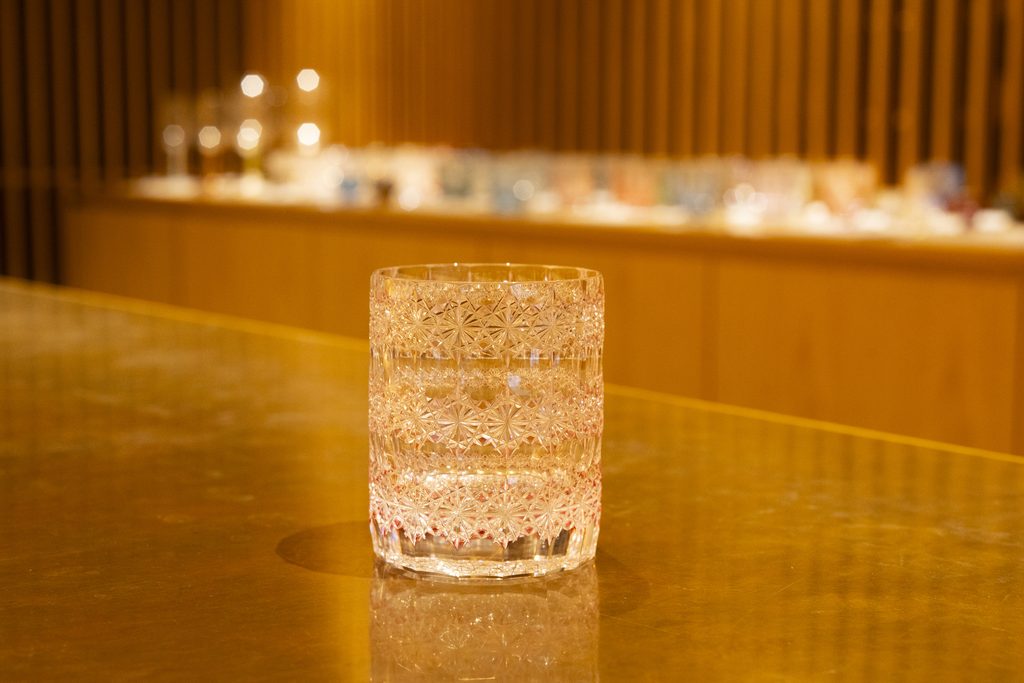
A traditional pattern need not be used in a traditional composition. In Yayoi Aoyama’s Soda rock glass, Kiku-tsunagi becomes an interpretation of rising carbonation bubbles. The technique is inherited, but its subject belongs to contemporary everyday life.
Coloured Overlay Glass: Revealing Clarity Beneath Colour
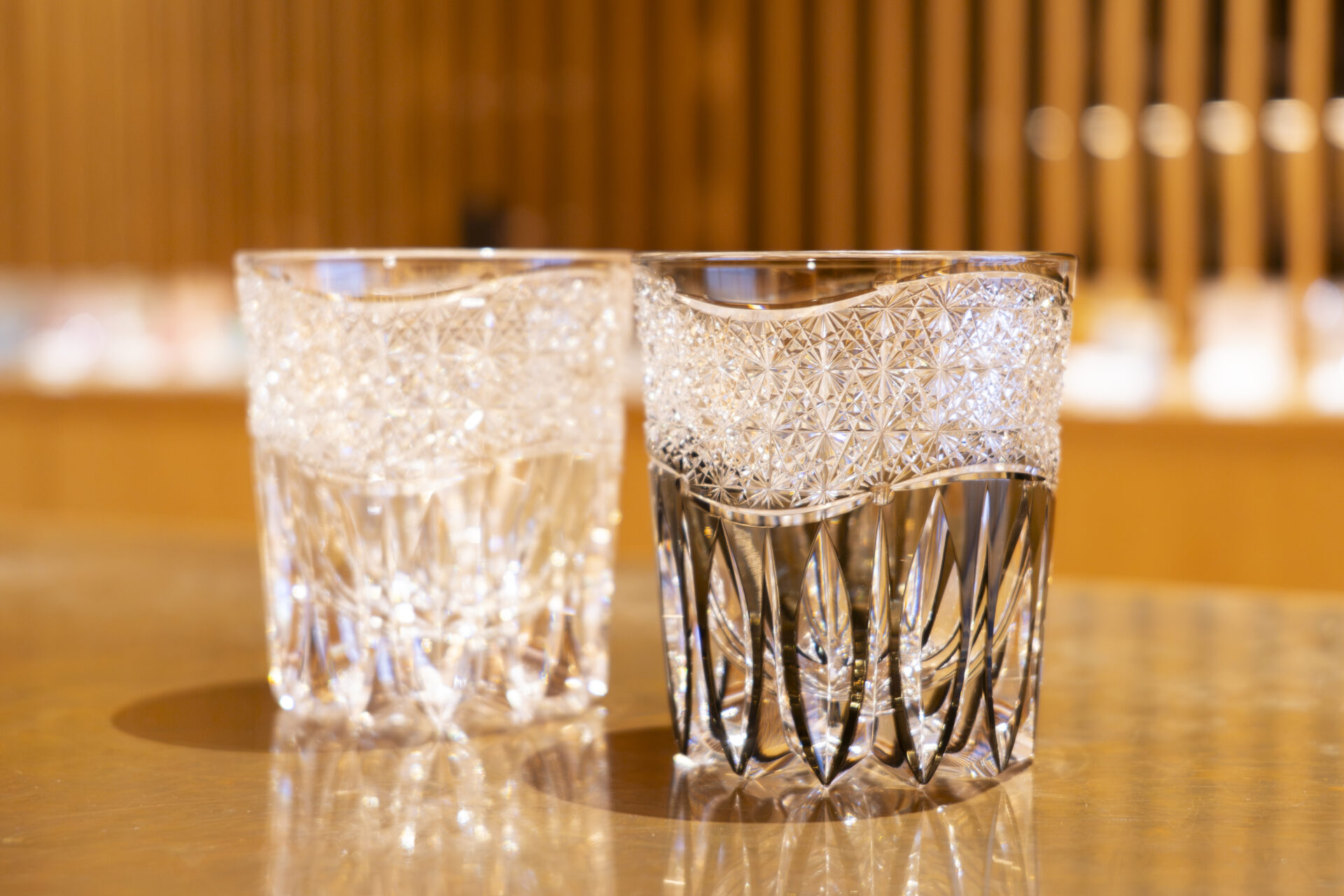
Edo Kiriko may be made from clear glass or from coloured overlay glass, in which a thin coloured outer layer sits over a clear body. Cutting through the surface reveals transparent glass underneath. The contrast makes each cut appear sharply defined.
Beyond familiar red and blue, makers also work with ink-like tones and green. Toa Glass Crafts’ Koka in clear and Aozumi shows how the same design takes on a different character when its colour changes.
Colour alone does not define the quality of a piece. Some artists make precision visible through colourless crystal; others carefully retain or graduate the overlay. The material and the way it is cut are part of each maker’s artistic language.
Marking, Cutting and Polishing: Where Craftsmanship Becomes Visible
The process begins with waridashi, marking out the intended design and its spacing. The artisan then brings the glass against rotating cutting wheels, developing the lines and facets before refining and polishing the surface.
Curved walls, variations in thickness and the meeting points between cuts all require judgement. Removing too much glass changes the overlay colour; an inconsistent angle alters the reflection. Even pieces with similar motifs reveal different workmanship in the sharpness and clarity of their cuts.
To appreciate this detail, look beyond the silhouette: examine where lines intersect, the finish on the base and the way light passes through individual facets.
Contemporary Edo Kiriko: New Scenes Through Traditional Techniques
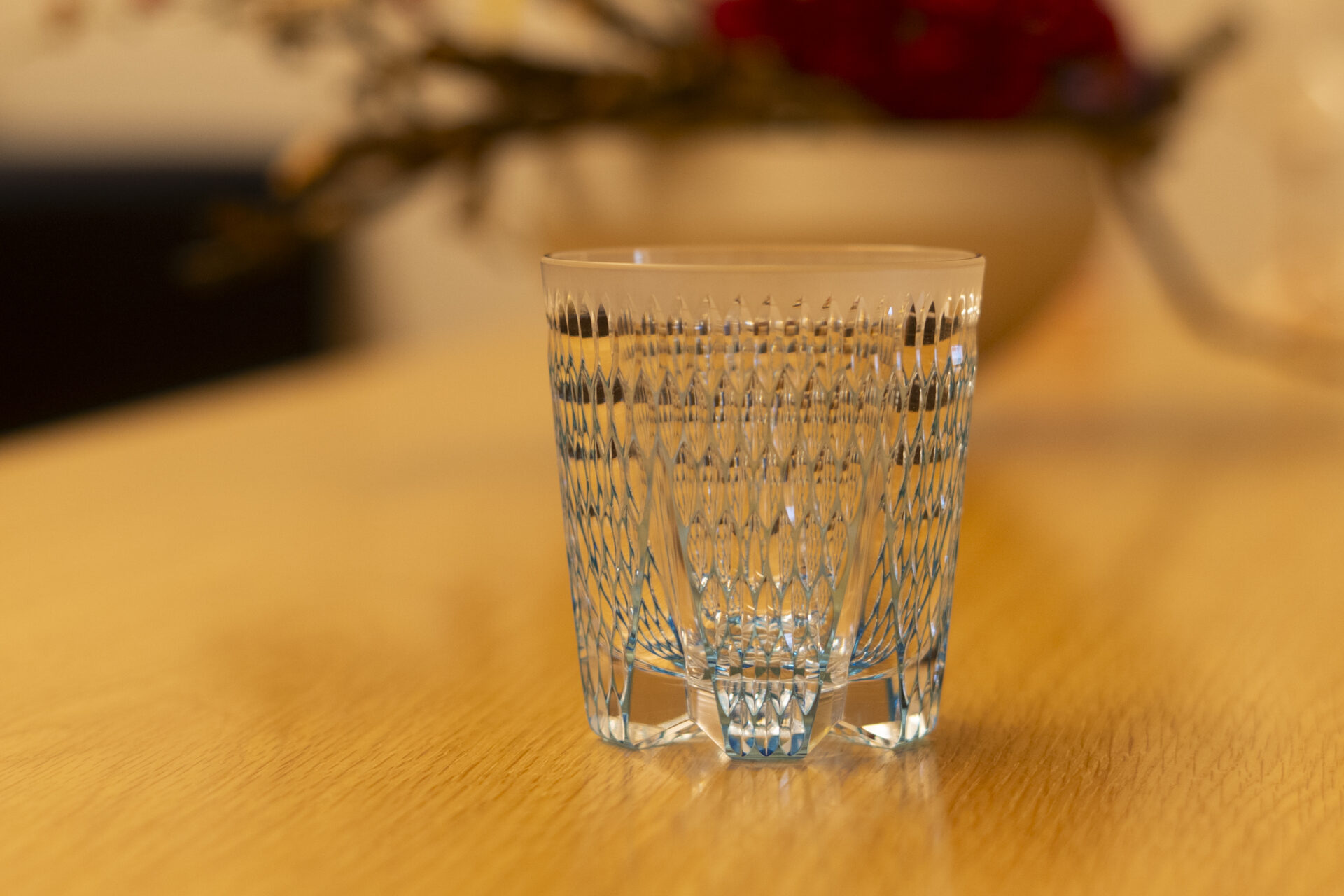
Edo Kiriko has never been limited to repeating historical patterns. Contemporary makers reinterpret water, rain, flowers and the natural world through inherited cutting and polishing techniques.
Yayoi Aoyama’s Kouu Blue depicts a sunshower. A softly frosted upper section evokes clouds, while precise cuts below suggest the sparkle of raindrops in the sun.
Understanding the traditional techniques enriches the experience of these new designs. The precision developed over generations is what makes such imaginative, modern expressions possible.
Edo Kiriko as Drinkware: The Final Expression Appears in Use
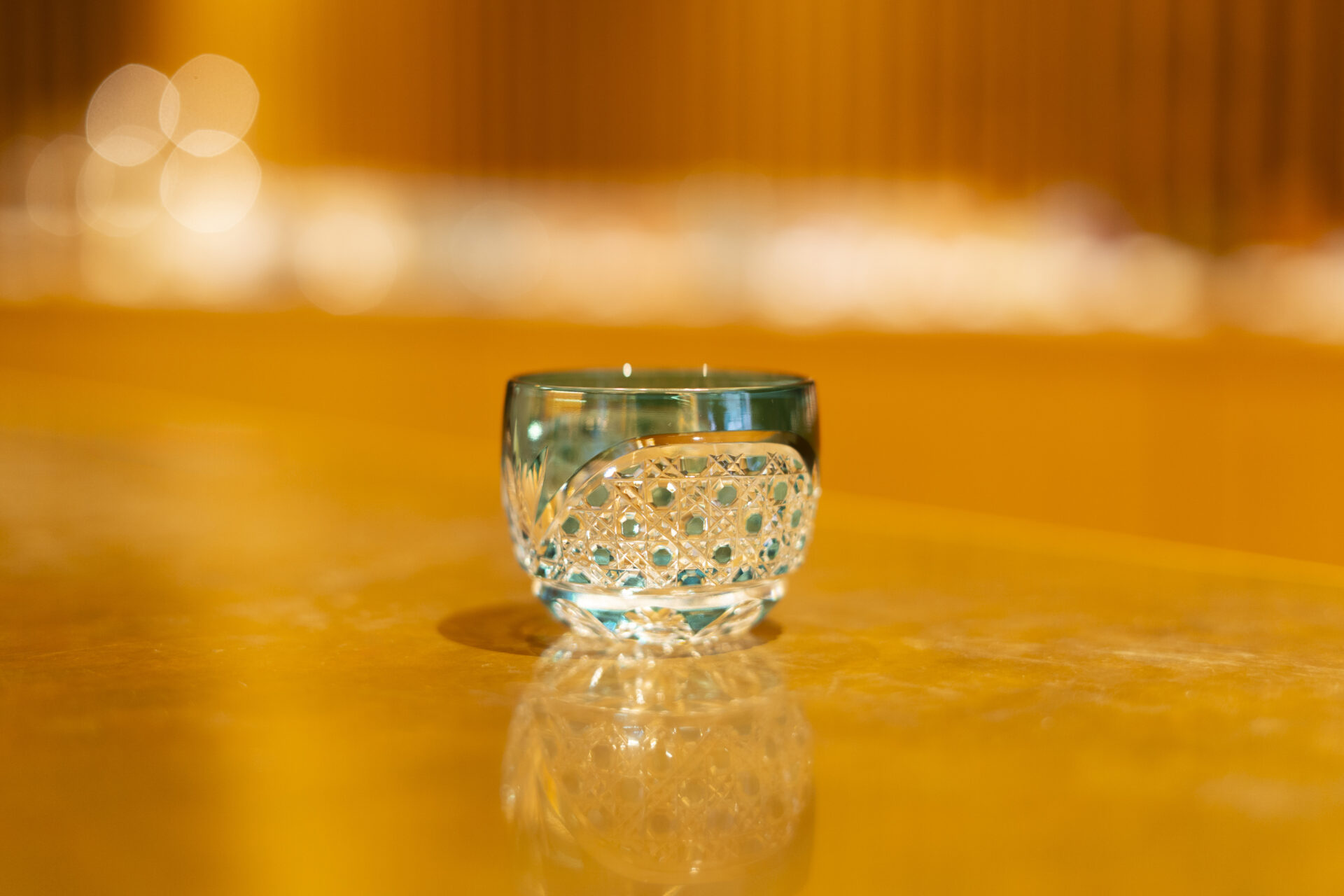
Edo Kiriko is made to be held as well as admired. Amber whisky transforms the reflections in a cut crystal tumbler, while sake can reveal the pattern on the base of a guinomi through the liquid.
Weight in the hand, the thickness of the rim and the tactile character of the cuts shape the experience. These qualities cannot be captured fully in an image.
IMAMI brings together fine drinks and Japanese glassware because the history of the object matters as much as the moment of using it. The artisan’s work continues to reveal itself each time the glass catches the light.
Edo Kiriko | Traditional Patterns and Japanese Cut-Glass Craftsmanship
Japan|Tokyo|Edo Kiriko|Japanese Cut Glass|Kiku-tsunagi|Kagome|Nanako|Coloured Overlay Glass|Marking, Cutting and Polishing|Japanese Drinkware
With origins traditionally dated to 1834, Edo Kiriko continues to bring together historic geometric motifs, precise glass cutting and contemporary artistry. Its changing reflections—whether empty or filled—make every vessel a distinctive expression of Japanese craftsmanship.
Availability at IMAMI
IMAMI specialises in wine, whisky, Japanese sake and handcrafted Japanese drinkware including Edo Kiriko. For current availability, please visit IMAMI Ginza, IMAMI Shinsaibashi, or contact us.
※Because each piece is handcrafted, availability and individual details may vary. Please confirm with the store.

