



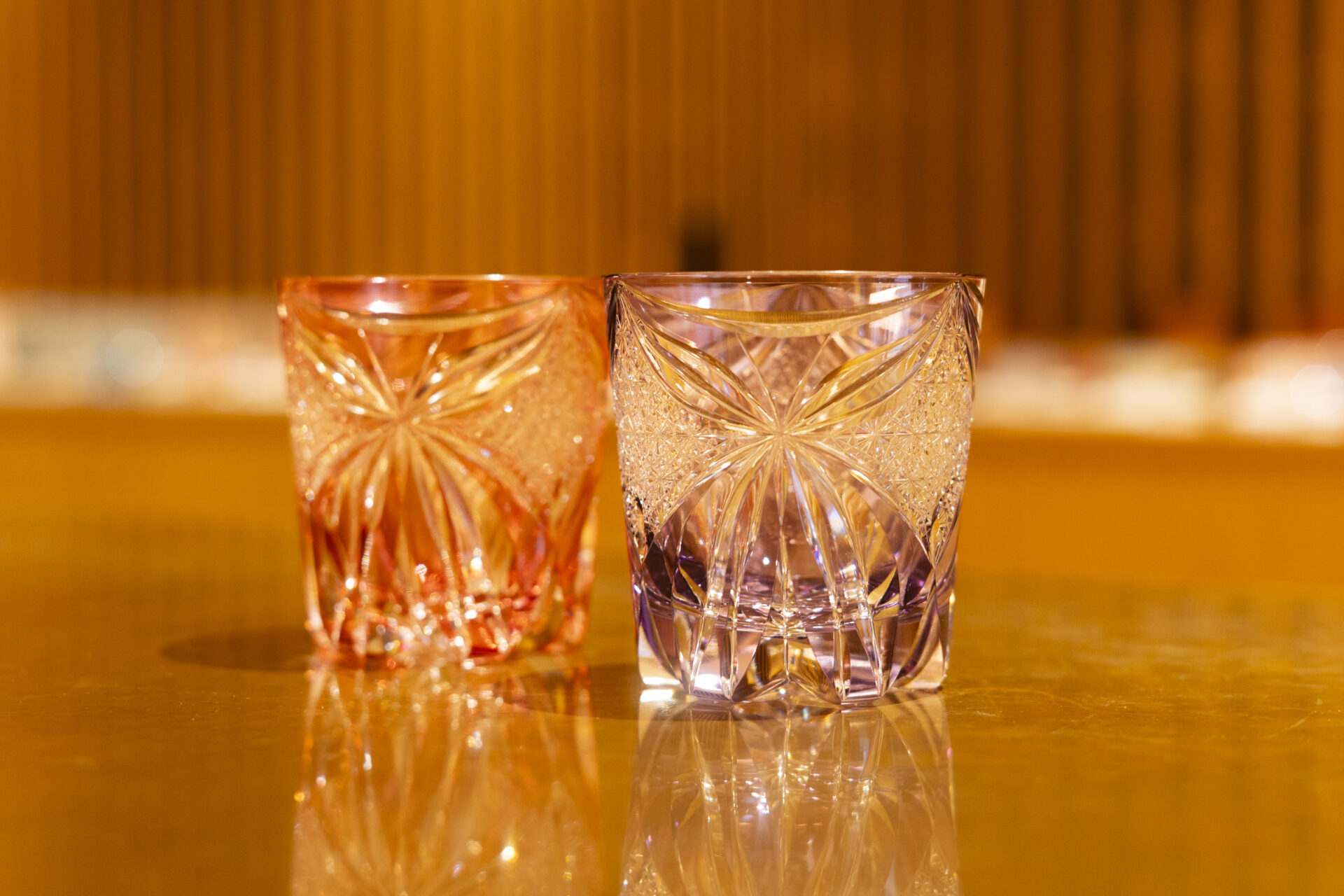
Nemoto Glass Crafts “Hu Die” (‘Butterfly’) | Gold-Red & Gold-Purple Edo Kiriko
The same cut pattern can take on a very different character when the colour changes.
Nemoto Glass Crafts’ “Hu Die” is an Edo Kiriko Old Fashioned glass — a rocks glass made in the Japanese cut-glass tradition associated with Tokyo. This article presents two of the workshop’s colourways: 金赤 (Kin-aka, literally “gold red”) and 金紫 (Kin-murasaki, “gold purple”).
The name 蝴蝶 (Húdié) is the Chinese word for “butterfly.” The piece combines flowing curves with finely controlled cutting, allowing the pattern to shift in appearance as the glass catches the light.
Edo Kiriko developed from glass-cutting techniques in Edo, the former name of Tokyo. Today it is officially designated as a Traditional Craft by Japan’s Ministry of Economy, Trade and Industry. Its visual appeal comes from the contrast between coloured glass and the clear surfaces revealed by precise cutting.
One design, two colours
Nemoto Glass Crafts offers “Hu Die” in several colour variations. Here, the Japanese product colour names are retained because they are part of the workshop’s naming: 金赤 (Kin-aka) and 金紫 (Kin-murasaki). The English descriptions “gold red” and “gold purple” are provided to make those names immediately understandable.
The form and cutting remain consistent, yet the colour of the overlaid glass changes the contrast between the coloured surface and the clear glass revealed beneath it. Seen side by side, the two versions show how much range can exist within a single design.
Kin-aka (金赤): Nemoto’s most difficult red colour
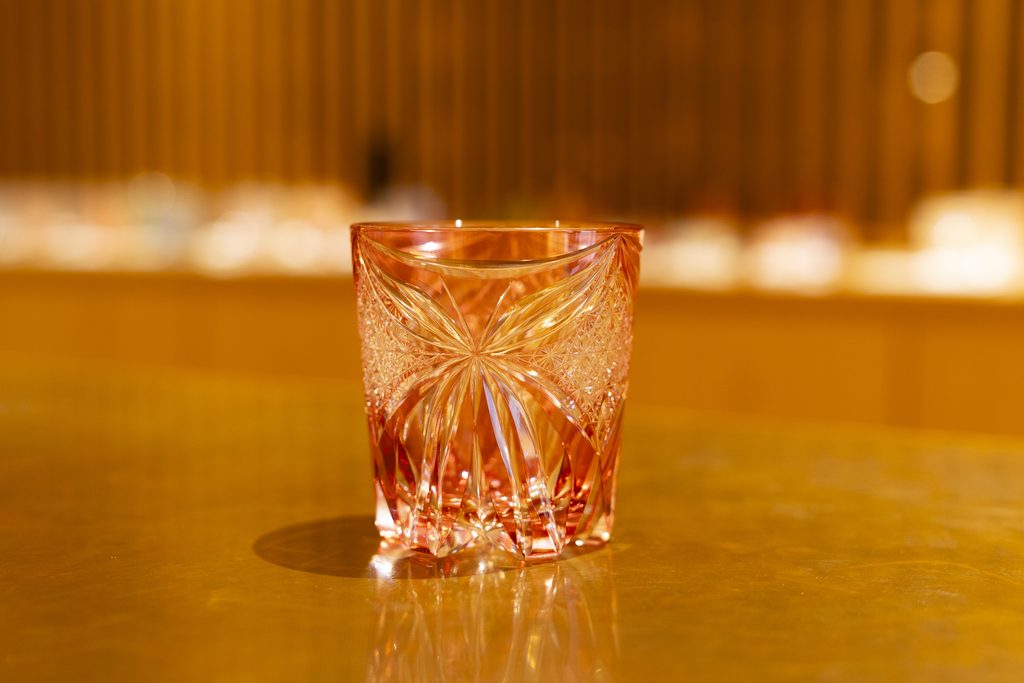
Nemoto Glass Crafts describes Kin-aka (金赤) as its most prestigious and technically difficult colour to produce. The workshop treats mastery of this red as an important measure of a glassmaker’s experience and control.
According to the workshop, producing this red consistently depends on factors such as the composition of the glass and the condition of the kiln. The colour therefore reflects not only the finished appearance, but also the accumulated experience needed to reproduce it reliably.
On “Hu Die,” the vivid Kin-aka colour is interrupted by clear surfaces exposed through the cuts, creating a strong contrast between colour, transparency and the precision of the pattern.
Kin-murasaki (金紫): the purple colourway
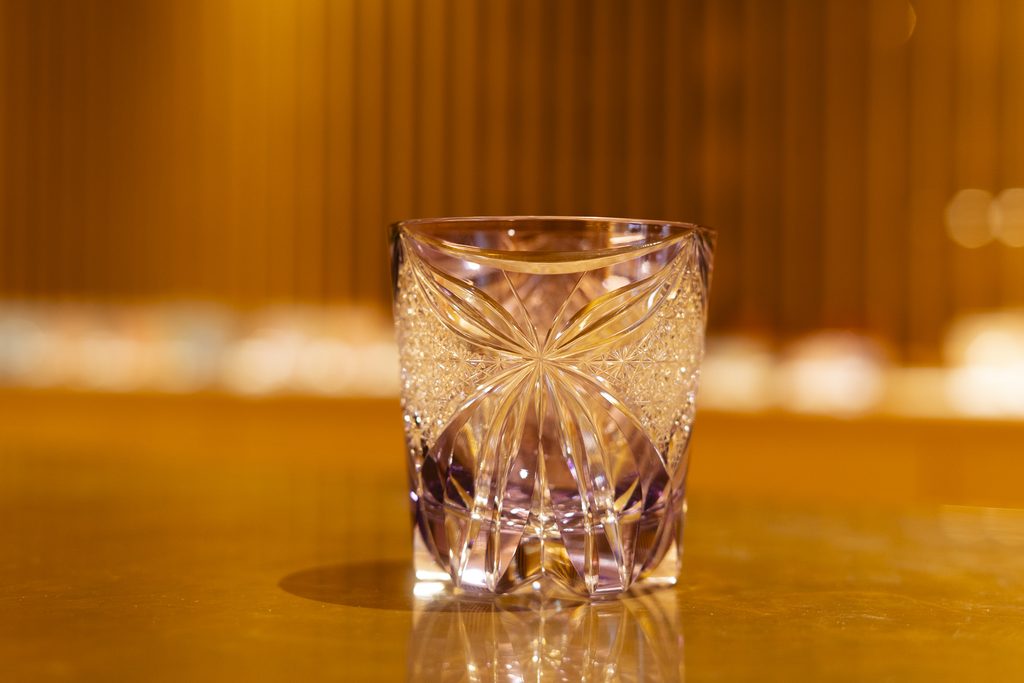
Kin-murasaki (金紫) is the purple colourway of the same “Hu Die” design. The Japanese name combines the characters 金 (“gold”) and 紫 (“purple”); in this article, “gold purple” is used as a plain-English guide to the product name rather than as a separate technical classification.
Because the underlying design is shared with the Kin-aka version, the two glasses can be compared directly: the colour changes the contrast between the coloured surface and the clear areas exposed by the cuts, while the butterfly-inspired composition remains the same.
What “hand polished” means in Nemoto’s work
Nemoto Glass Crafts places particular importance on sharp cut edges, precise patterns and the transparency and lustre achieved through hand polishing. The workshop contrasts this time-consuming finish with more efficient polishing methods, treating the final polish as part of the craftsmanship rather than simply a finishing step.
The workshop states that this approach has been handed down from Yukio Nemoto to his son Tatsuya Nemoto, and then to his grandson Kosho Nemoto. The result is not simply decorative tableware, but glass shaped by techniques and standards carried across three generations.
“Hu Die” reflects that balance: butterfly-like curves and a sense of movement are held within cuts that remain exact and controlled.
Why the two colours are worth seeing together
Kin-aka and Kin-murasaki share the same form and cut design, yet the two colourways create distinctly different visual impressions.
Placed together, they reveal how colour can change the perceived depth and contrast of the same cut pattern. Because an Old Fashioned glass is commonly used for whisky and other spirits served neat or over ice, the amber colour of the drink and reflections from the ice can add another visual layer once the glass is in use.
Available at IMAMI
IMAMI specialises in wine, whisky, sake and Japanese drinking vessels, including Edo Kiriko. We present each piece together with the craftsmanship and background that give it lasting value.
For in-store product availability, please enquire at IMAMI Ginza or IMAMI Shinsaibashi, or contact us.
Product selection and availability vary by store.
New arrivals are announced on our official Instagram @imami__japan and in our NEWS archive.
